Prospect members’ survey 2026: cost of living concerns, impact of AI and the Employment Rights Act
Prospect’s members’ survey 2026 gathered 5,821 responses from across the union’s sectors. Below we highlight some of the significant trends and findings, which you can dive into more in our members’ briefing.
Download the Prospect members’ briefing
Download the Bectu members’ briefing
Rising insecurity at work
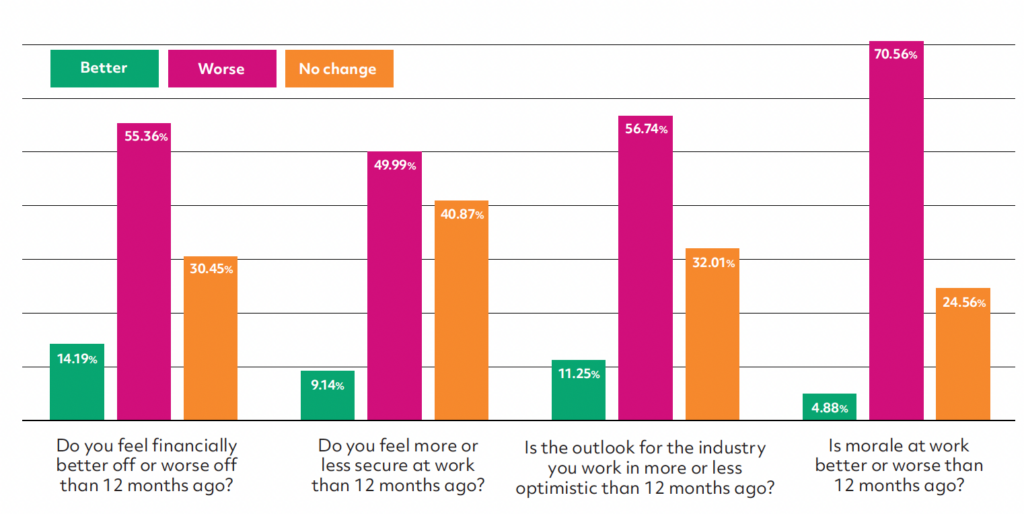
Workers are experiencing a financial squeeze, with more than half of respondents reporting being worse off financially than a year ago. Half of respondents are most concerned about the cost of living.
Respondents are also feeling less secure at work, rising markedly from 26% in 2024 to 50% in 2026.
Rising insecurity and increased workloads (almost a third have seen a significant increase in their workload in the last 12 months) has fed a deterioration in wellbeing. There are widespread mental health concerns across all sectors, with half of respondents saying they are struggling with their mental wellbeing and 61% feeling stressed at work.
Unequal experiences
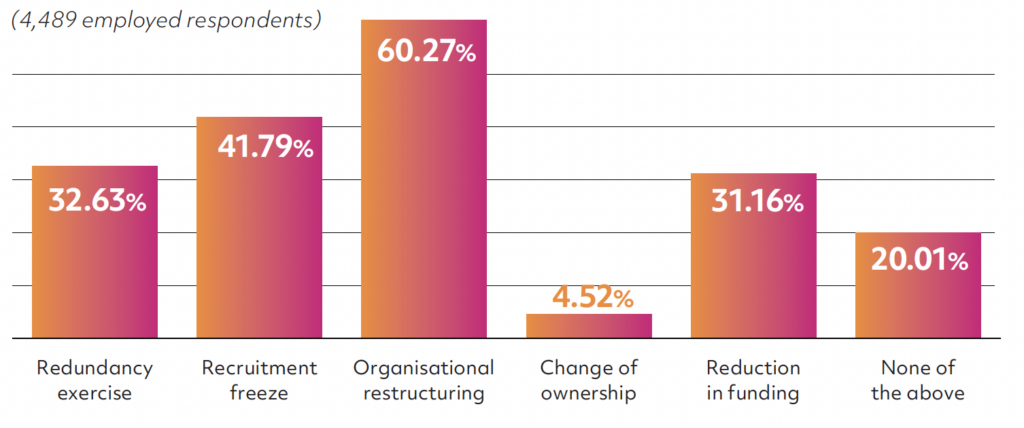
The survey results highlight engrained inequalities in workplace experiences. There are similar figures reported in terms of organisational restructuring and redundancies in members’ workplaces, but respondents voiced distinctly different experiences: 56.2% of BAME respondents say they feel less secure at work than 12 months ago, compared with 48.8% of White respondents. This increases to 65.4% of Black respondents.
And women are far more likely to report experiencing stress at work in the past 12 months, being excluded from meetings/opportunities, and microaggressions at work.
Disabled workers report dramatically higher exposure to negative workplace experiences across every measure, including being twice as likely to experience bullying or harassment and almost three times as likely to experience discrimination at work.
Experiences of AI
Many members report negative impacts arising from the use of AI at work. This includes time lost fixing AI mistakes and unclear guidelines on when or how to use AI.
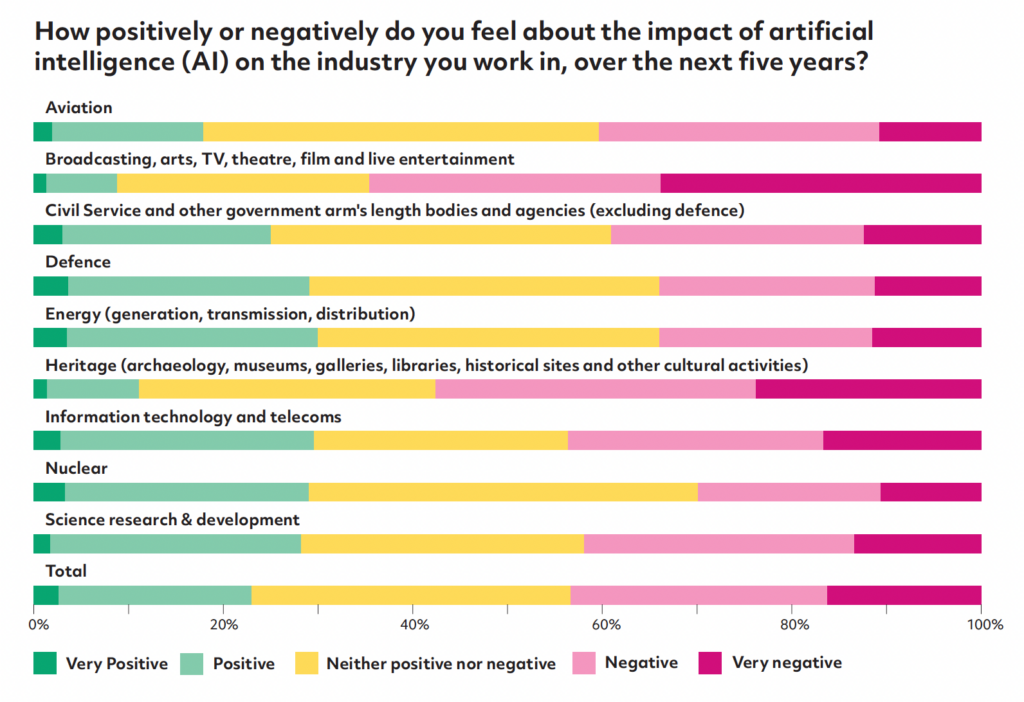
The least engaged with AI technologies are, understandably, those who feel the greatest threat from AI technologies, in the creative, heritage and cultural industries. But that also reflects how these sectors are among the least supported by their employers and engagers in using AI.
Training on using AI at work is most likely in the Civil Service and IT and telecoms. However, one in five respondents do not feel that guidance is clear on when or how to use AI.
The Employment Rights Act
Prospect’s members are strongly behind the new rights in the Employment Rights Act 2025, seeing the act as a concrete route to better work, and they want its measures delivered.
Support is notably strong among women, particularly for rights linked to caring responsibilities and work-life balance. There is a clear gender gap in support for guaranteed regular work patterns on zero hours contracts, with 53.8% of women rating this as very important compared with 42.3% of men. This highlights how the reforms speak directly to longstanding gendered inequalities in access to secure, flexible work.
What next?
The survey has highlighted the centrality of the cost of living and insecurity at work among Prospect members. Prospect has been working to address these challenges at a national and sectoral level, including:
- Pressing for reforms in the Civil Service pay remit to unlock progression and boost specialist pay
- Highlighting the impact of cuts in grant in aid funding on the heritage sector and workforce
- Highlighting the need for an increase in defence funding to secure future work and resist poorly implemented defence reform plans
- Bectu has been central to the launch of an All-Party Parliamentary Group for Freelancers, which will provide a forum for helping address the unique challenges facing freelancers.
To better address inequalities at work the union is strengthening our network of equality reps through a new programme of training, to help prepare reps for new rights under the Employment Rights Act 2025.
Building on the above work and using insights from the survey, we will work with branches to act on their priorities.