Conference passes emergency defence motion calling for higher spending and closer ties with European allies
Prospect will campaign for a government commitment to provide an adequate level of spending that will meet the urgent needs of defence and trade policy, while also pushing for the immediate publication of a fully funded Defence Investment Plan, following an emergency motion that was passed on the final day of National Conference.
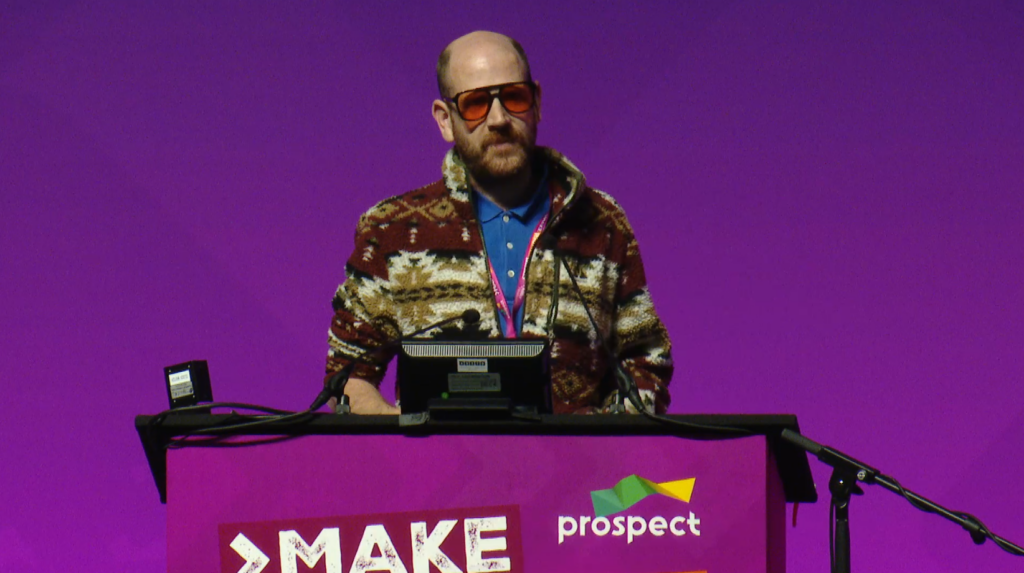
David Foote moving the emergency defence motion
The motion, proposed by Rosyth Royal Dockyard, also instructs Prospect’s National Executive Committee to campaign for the UK to pursue a closer relationship on defence with our European allies.
The branch’s insistence on bringing this emergency motion was further justified when John Healey MP resigned as Defence Secretary just a few days after National Conference finished. His resignation letter said the Defence Investment Plan ‘falls well short of what is required for defence and the country at this dangerous time.’
Moving the motion, David Foote (Rosyth Royal Dockyard) said, “The government said they were going to have a Defence Investment Plan, but they haven’t. We are at risk. There are foreign actors in the world that want to attack Britain… We need to be ready for it.
I don’t want war, but I want to be able to defend my country and have the spending to allow communities to thrive within our country. This is vitally important. We talk a lot here about solidarity. You’ve got to have solidarity with jobs — everybody’s jobs — and not just disagree with jobs that you don’t believe in.”
The motion stirred a passionate debate with several delegates speaking both in favour and against its proposals.
One of the common arguments against the motion was voiced by David Miall (National Oceanography Centre) who feared that increased defence spending would mean less money for his own sector.
“We’ve got a government which has publicly, and very vocally, committed to taking cuts from all other budgets anytime it increases defence spending. If you’re outside of defence, this is almost certainly going to impact your branch, and your members, by reducing your budget.
“So, I cannot stand here today and support this, sadly, because it is almost certainly going to impact my members when the defence spending budget goes up and the government takes cuts from elsewhere.”
Robin Kennedy-Reid (UK Research and Innovation) told Conference that he was sympathetic and respected the defence sector, but he opposed the motion because it was too broad ‘in its instructions’ and there were no caveats around an ethical arms policy.

AWE’s Lauren Johnstone
Speaking in favour of the motion, Lauren Johnstone (Atomic Weapons Establishment) said, “We currently commit £60 billion, approximately 2.5% of our GDP, to defence, and they want to increase that to 5%. That will give us a secure future that provides excellent skilled jobs in the UK, whether it’s on the front line or the last line of defence.
“These are jobs that we are proud to hold, jobs that we are incredibly proud to represent here. I won’t stand here and justify my job, or my role as a representative, but I will stand and say this defence sector of Prospect is proud to be here.”
Neil Thomson (Scottish and Southern Energy) voiced his support to the motion by saying:
“Some say it is the most basic duty of a government to protect its people. The global situation has been pointed out. We all know there are new methods of aggression. Previously firm alliances are deteriorating, which shows how important it is for the UK to have a Defence Investment Plan that supports a native defence industry.”
Kirsty MacLeod (Ministry of Defence) said:

MoD’s Kirsty MacLeod
“Not only am I concerned regarding my civil service workforce, who are currently facing 10% reductions yet again… but also our wider defence sector, who are being hit by the delay in this Investment Plan. It’s causing some companies to go out of business.
“The ripple effect against all those other suppliers is huge, and ultimately, that does affect all of you. People are losing jobs. That means there’s a reduction in people paying tax and more people claiming benefits, so it impacts all our money. I please urge you to support this motion.”
There was also an attempt to have the motion remitted, which delegates voted down. Prospect General Secretary, Mike Clancy, spoke on behalf of the NEC against remittance, and argued that increasing the defence budget did not mean reducing budgets for other vital government priorities like science and the environment. He told delegates:
“Conference, it’s a pivotal moment because if we are saying that we do not make ambitious arguments for spending in one area, because it could have an impact in another, then we’re making arguments for no spending decisions anywhere.
“The reality is we have to grow the tax base; the reality is we must fund our public services; and the global situation, which you all know well, has changed remarkably.”
He added:
“It’s very important that you recognise the community impact of these jobs. These are unionised jobs that offer long-term careers, and there is a multiplier economic effect, which is beneficial across the country.
“We are the union that represents people doing controversial work. We are the union that often represents people who cannot speak for themselves because of their security clearances. It is a pivotal moment. It is obviously an area which breeds passionate debate, but the NEC asks you to support this motion and give unequivocal support to our defence members.”
The motion was carried by a large majority of Conference delegates: 204 in favour, with 97 against.
